
So, I decided to scrap my review of Black Mirror‘s fifth season because, after mulling it over a bit and seeing what others thought of the season, I couldn’t really say as much about it as I initially assumed. I also haven’t made much progress on the fourth part of my MCU Catch-Up about the Guardians of the Galaxy Christmas Special and the series’ third installment (with a brief retrospective on the first two).
Instead, I wrote this. Hope you enjoy it and, if not, thanks for reading it anyway!
There’s no nice way to say this: the current pop culture discourse makes me incredibly depressed and, in turn, despise humanity as a whole. Well, at least, more than I usually do…
Lewis Waller is correct that we’ve had these clashes of values throughout the history of society, what you could call a “Culture War”, but our most recent clash of values is just…really fucking stupid. It feels like reality is turning into a parody you’d see featured in a Grand Theft Auto game. There’s nothing transformative or edifying about this discourse because, well, how can you discuss anything with people who call things “woke” yet can’t make a cohesive argument as to what that even means or why that’s bad? To them, it’s just self-evident, impossible to reconsider – though, I hope they do. Oh, then they’ll call you a pedophile or a groomer. Why? Just ‘cause. That is what most normal people would call a “waste of time”.
Maybe, just maybe, it wouldn’t bother me so much if the political symbolism attached to these movies, series, etc. was actually reflected in the content. Because, more often than not, it’s simply projected by Terminally Online™ dipshits and, frankly, I don’t want to understand why – lest I be infected by some kind of logic virus. It also wouldn’t hurt if others didn’t engage in this nonsense, perhaps “ironically” (another term rendered meaningless by the internet along with “satire”), by championing the film these anti-woke types hate for some bizarre reason. Especially when those films are made by large corporations and acting like them getting hundreds of millions at the box office is an achievement for social justice when, like, it’s not. Stop it, for the love of God. Do some organizing, go to a protest, make a blog detailing police brutality at length – don’t just consume media and call it a day.
The latest sacrificial lamb of this embarrassing social spectacle is Greta Gerwig’s Barbie. Like, it shouldn’t be, but we live in the darkest of timelines.
C’mon Barbie, Let’s Go Party!
For a while now, I’ve had an intense aversion to metacommentary in fiction.
It’s been a chronic annoyance, whether it’s something as recent as Velma or from years back like Jurrasic World. It’s difficult to come across a piece of media that wasn’t nudging and winking at the audience with a shit-eating grin. It became more and more of a crutch, especially in comedies, to the point where characterization and plot didn’t matter. Just being oh-so-self-aware while making lame observations about how silly this fictional story is don’t-cha-know was somehow enough for these people. People who, by the way, are paid to make entertainment. There’s no effort in it and it’s never really used to elevate the material, it’s about being so above it all that you don’t give a shit. So, by that logic, why should I give a shit about what they made? Why waste time on something so intentionally half-assed? Why even bother considering it, in the first place, if they’re not even going to try?
Thankfully, there is now a much-needed exception to that abhorrent rule, in the form of Greta Gerwig’s Barbie.
Its metacommentary – its metacomedy – is not only intrinsic to the film’s premise but manages to carry the entire narrative without relying on this pretense of sarcastic self-referentiality. In fact, what makes it work is downright embracing the artifice of its subject matter. However, rather than filtered through this very 1990s/2000s-era notion of “caring too much is lame”, this film really does care. It cares about the legacy of Barbie as a cultural phenomenon, it cares about how Barbie has affected our notions of femininity in contemporary society, and it cares about how Barbie can evolve to better reflect reality while still functioning as an aspirational figure for girls. However, just as importantly, it’s genuinely funny while showing such care.
There’s this tendency to believe that a “dumb fun” film can’t be meaningful and…that’s bullshit. If years upon years of suffering Oscar Bait have taught me anything, it’s that the veneer of prestige is often a smokescreen for ultimately vapid narratives that only espouse empty platitudes. At least, when it isn’t thinly veiled propaganda for the U.S. military. That, to me, is far more pretentious than unapologetic schlock that wears its heart on its sleeve. One that doesn’t care for subtlety, much like Garth Marenghi. Barbie’s comedy is broad, relying on exaggerated behavior, but it’s not “stupid” even if the characters behave that way. Everything they do and say, ridiculous as it is, has a point that leads to a fulfilling (enough) conclusion. Prior to Barbie, the only other films I’ve seen written and/or directed by Greta Gerwig were Frances Ha and Lady Bird. They were both certainly clever but, despite some chucklesome moments, neither of them was that comedic and skewed more to the dramatic side. So, on some level, I was worried that Barbie could end up being botched as an out-and-out comedy – a worry that was, thankfully, proved unnecessary.
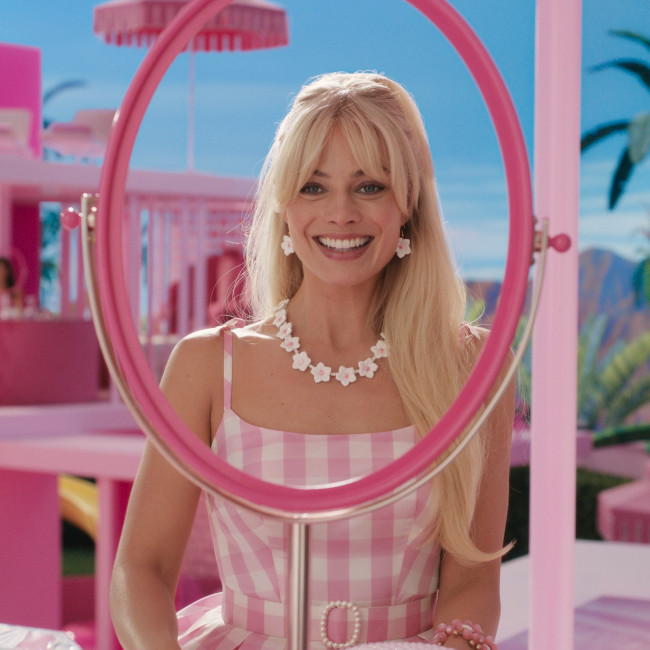
Hey, look, it’s Harley Quinn!
The most perplexing part of the backlash to this film (which I’ll go into more detail – in the following sections) is about how it’s “man-hating” because…it’s not. At all. In fact, it does care about men, but specifically about the negative effects of toxic masculinity. I shouldn’t have to explain that the concept of “toxic masculinity” does not mean that all masculinity is inherently toxic. Still, I have to because many aspects we consider inherent to masculinity – despite ultimately being arbitrary, as the factualized sensibilities of the affluent – are actually self-destructive and detrimental despite their lionization. To be needlessly competitive with other men, as if obligated. To be obsessed with romantic and sexual conquest, if only to prove personal worth to those other men you compete with. To find certain behaviors or interests as “girly” and emasculating, even when you find them enjoyable and comforting in a cruel world.
The film, quite rightfully, argues all of that should be abandoned. Not purely for the sake of women, who are also negatively affected by it, but for men to be happier with who they are regardless of societal or interpersonal expectations or demands. To, in fact, have healthy relationships with other men not based on competition but shared interests and passions. If that’s somehow “man-hating”, I’ve gotta ask one important question: what fucking planet do you even come from?
However, I should clarify, that this film isn’t revolutionary in its politics. How can it be when Mattel is the one signing the checks? That’s just the reality of major film productions under capitalism but, as much as that fact does bother me, I don’t consider that an egregious transgression in of itself. The problem is that when it does pull punches, it’s distracting in how half-baked the results are within an otherwise cohesive directorial vision. Will Farrell’s presence as Mattel’s fictionalized CEO, which would’ve worked better as a one-scene cameo, quickly gets long in the tooth yet remains until the conclusion – all of which has this insecure air about it. Farrell and his underlings can’t just be the butt of the joke but are humanized, as well as awkwardly including them in the film’s resolution, adding very little.
The problem with the resolution isn’t entirely in Farrell’s hands but simply that the film works better when its stakes are personal in scope, and it’s greatly lessened by the third act’s conflict. The movie is, to some extent, about societal concerns in the micro sense – mainly how we define gender and the effect it has on the individual – but really can’t deal with them in the macro sense. I didn’t expect the film, nor think it was needed, to deal with it. It could’ve just been Margot Robbie and Ryan Gosling simply reconciling and it’d work just as well.
So, it’s not perfect, but that’s not a deal breaker – as perfection isn’t actually a thing – and, ultimately, this is about something I briefly mentioned in the last paragraph: directorial vision. What makes this film as genuinely good as it is, warts and all, is that Greta Gerwig had something unique to say and show about a subject that interested her. That’s something we need more of, in so many of these theatrical releases, because brands can only go so far before the Law of Diminishing Returns kicks in. So many studio execs, with their bizarre hyper-fixation of content over context, seem to forget that it isn’t always about what is in the film but how it is conveyed by the filmmakers that intrigues and immerses the audience, rather than brand iconography.

Hey, look, it’s Shang-Chi!
Given its success at the box office, Barbie proves that…
Outrage-Industrial Complex
Now’s time for the shit show, folks!
Call me “out of touch” or “old-fashioned” for saying this, but there are a lot of internet phenomena that I’ll never understand the appeal of – such as reaction streams that could go on for ten hours or more – and doubt I’ll reconsider. I’ve got enough stuff on my plate as is and not really interested in trying anything that new (if only at the moment). Regardless of all that, I’d also never say they shouldn’t exist simply because they don’t appeal to me personally.
Actually, that’s not entirely true, because there’s an exception to that rule. It’s not just because I dislike the material (though I vehemently don’t) but because I find their existence reprehensible and culturally destructive. Seriously, if they disappeared tomorrow, it wouldn’t be soon enough – but at least they’d still be gone…
Whether it’s Benjamin Shapiro of the Daily Wire, William “The Critical Drinker” Jordan, Jeremy “Geeks+Gamers” Griggs, Jeremy “The Quartering” Hambly, or Gary “Nerdronic” Buechler – their entire purpose is to throw gasoline onto the fire that is the current Culture War, for an audience who are perpetually enraged over the pettiest of concerns. It doesn’t matter if they genuinely believe what they say or are simply grifters exploiting the ignorant because, regardless of intention, the result remains the same, and none of us end up better off. To differentiate between each of them – to nitpick the minutiae of their insipid arguments – is missing the forest for the trees: they are all interchangeable and that is because who they are doesn’t matter, it’s that they echo a sentiment that validates and enables the worst impulses of their audience. An audience that, under the most sinister circumstances, can be radicalized to reactionary politics, not due to a deep-seated interest in political theory, rhetoric, and praxis but poisoning the well of pop culture discourse to make it as toxic as possible. That toxicity, as pathetically unserious as it is, is foundational to reactionary politics.
Before dying and being cast into the deepest circle of Hell, to sit between Rush Limbaugh and the seat reserved for Henry Kissinger, Andrew Breitbart espoused a certain sentiment: politics is downstream from pop culture. One can’t help but think, when hearing that, the current incarnation of the Culture War was heavily influenced by this attitude and propagated these retrograde man-children to appeal to the fanboy rage of other man-children, all in order to make them just as retrograde. Even if, at this moment, their popularity seems to be dwindling – there will always be another generation of outrage-baiting grifters who’ll continue to make the world a worse place to live in. Of all the names I mentioned in the previous paragraph, I doubt any of them – with the only possible exception being Benjamin Shapiro (what with being financed by environmentally destructive billionaires) – will matter to anyone except the most Terminally Online™ several years from now. Simply a footnote, and nothing more. Their lifespan may be short but their easily expendable and replaceable nature means that there’ll be another generation of shit-stirrers weaponizing humanity’s worst habits as a means of profit and influence.

The Devil will get his due, Hank…
The thing is, with Barbie, that it’s nearly impossible to find a single criticism from any of them to at least be cogent. They cannot. For a film that supposedly “hates men”, as they like to claim, it never occurs to them – if not being purposefully obtuse – the film’s feminist philosophy applies to both women and men. I’ve already described why but, as the YouTube channel Pillar of Garbage eloquently analyzed, individuals like William “The Critical Drinker” Jordan don’t go into a movie like this open-mindedly or even willing to engage with the content on its own terms. It’s all fodder for some ideological polemic that is obviously more concerned with pushing a nonsensical notion of how Hollywood, a place that is just as capitalistic as everywhere else in the United States, is “pandering” to all the “wokes”.
The saddest part of all this, as if it weren’t already depressing enough, is that this line of argumentation isn’t new. In fact, it’s been around for decades and simply dons a new facade every half-decade or so to stay relevant. William Lind and Bill O’Reilly don’t carry the same social capital as they used to but, nonetheless, their brand of fear-mongering over “political correctness” remains in the form of current rightwing punditry decrying “wokeism” and “cancel culture”. O’Reilly’s “War On Christmas” narrative, when thinking about it for a second or two, is completely laughable since it comes down to blind outrage over the mere acknowledgment that there are other holidays around the same time that are not Christmas.
Saying “Happy Holidays” cannot, regardless of one’s overactive imagination, erase the fact the majority of people within the United States identify as Christian, in some form or another, and celebrate Christmas. Proven further by the fact that, of all the holidays acknowledged in the United States, Christmas is blatantly celebrated in public, and media – like movies and special episodes in series – are made specifically to celebrate it. Chanukah, Diwali, and Ramadan have yet to somehow overshadow Christmas simply due to saying “Happy Holidays” instead of “Happy Christmas”. Of course, O’Reilly doesn’t have an original bone in his bloated body and got it from elsewhere – specifically Henry Ford. Yes, that Henry Ford. Because, of course, Hitler’s pen pal would be the kind of guy who’d argue that the Jews would take away Christmas. Never mind that, like, it still has yet to happen and is very unlikely to ever will.

Another terrible Hank!
Are you noticing the trend here? These people are concocting delusional, paranoid fantasies to talk about incessantly – to speak of some nebulous doomsday that will happen soon, yet never does. When it doesn’t, goalposts are conveniently shifted and talking points revised to assert that there’ll be another nebulous doomsday that’ll happen soon yet, again, never does. It’s a snake with the shits, eating its own tail, somehow continuously swallowing its shit-covered self. Most importantly, this is almost never a concern of the marginalized – they’re too busy trying to get by and survive – but almost always a privileged person who has no right to complain about their current situation. In having such boring yet untroubled lives, they have to create their own problems…
A Much-Needed Reality Check
There’s this thing called the “Overton Window” which, if you’re unfamiliar, is a way of gauging the acceptability of government policy within a region. That’s obviously not the most comprehensive definition but it’s important to the point I’m bringing up: as much as people in the U.S. use “liberal” interchangeably with “leftwing”, the reality is that in many Western European nations (and Canada), liberalism is considered a center-right position, and that tells you a lot about how – when coupled with a geocentric attitude and mass political illiteracy – ridiculously rightwing the U.S. actually is as a country. While those Western European nations (and Canada) tend to, but not always, stay in the center of the Overton Window, the U.S. is so skewed to the right that even policies that would be considered sensibly moderate to the point of being downright inoffensive are hyperbolically framed as “radical leftism”.
If there’s a reason the current Culture War is so bizarre to the point of self-parody it’s partly because, in an aggressively rightwing country, even the smallest of changes is treated as the end of the fucking world. In a more politically balanced (or, preferably, leftwing) place – a black woman being the lead in a film wouldn’t matter in any form of serious political discourse. We certainly wouldn’t have politicians acting as if Dylan Mulvaney receiving a single goddamn can of beer with her face on it was, somehow, grooming children (I’m pretty certain they don’t drink beer) to become trans. You would think, being policy-makers, there’d be more pressing concerns like preparing for climate disasters, fixing the economy, or curtailing the ridiculous amount of gun deaths year in and year out – but they’re just ignored or treated as some afterthought. I think, at the root of it all, it’s that their ideas really suck and would only make things worse for most citizens, purely to benefit themselves and their associates, and literally have nothing else but the Culture War to be appealing to the majority of their voter base.
The ultimate problem with framing politics as being downstream from pop culture is that, while it may help radicalize those whose outrage can be weaponized, it doesn’t make them more politically involved in any other substantive, long-term, way. They can only ever function in the short term. Their idea of political activism begins and ends with being outraged over their favorite hobby supposedly invaded by nefarious outsiders, who are nowhere near as powerful and influential as they think. Hollywood films having slightly more people of color, women, and LGBTQ+ individuals than usual is just the bare minimum when it comes to representation. It implies a form of tunnel vision, on behalf of these reactionaries, that they’ll view exceptions as the rule rather than feeding crumbs to the marginalized for marketing purposes.

Wokeness, brought to you by….the U.S. Air Force?
What can we do about such people, though, when the next wave of pop culture-poisoned shit-stirrers comes around to annoy us all to death? I don’t have a definitive, all-encompassing answer but I’ll try to suggest a few things that could help.
For one, we should keep in mind that internet presence does not equate to popular sentiment outside of it and that much of that presence is simply due to obnoxiously vocal niches. They only seem to be popular because of the often intense and repetitive nature of their rhetoric, which can be easily mistaken for a commonly held belief based on frequency alone. Prevalence and relevance are far more important to consider when such inflation is so easy.
Secondly, we need to stop politicizing pop culture in general and simply treat Art as Art; which, while political in itself, should not become the basis for any serious political discourse. Even Online Leftists™ have this bad habit of trying to politicize pop culture, as a case of “fighting fire with fire”, yet all they’re really doing is fueling those reactionaries further. Any form of engagement, even when it is disparaging and disproves them in every conceivable way, validates them as they perceive it as being treated seriously enough to argue against. The best way to react is with a combination of sarcastic derision and flippant dismissal because, ultimately, their concerns are so juvenile and inconsequential that it’s all they truly deserve. If you give them an inch, they’ll take it a million goddamn miles.
Third, and lastly but definitely not least, fandom needs to be kept separate from political activism – with the thickest, most impenetrable barrier ever. Like Church and State, the politicization of pop culture and the toxic, irrational fervor that comes with many fandoms is a dangerous combination whose effects are disconcerting. It is telling that some within Donald Trump’s cult of personality were so politically illiterate that, upon receiving his status as President of the United States and immediately trying to implement executive orders, were surprised when they realized he didn’t, in fact, have their best interests at heart. There’s a scene in King of the Hill where Hank takes Bobby to a speech by former U.S. President George W. Bush and tells him to not listen to the words but to the sound of his voice, eventually feeling all warm and fuzzy on the inside. Just like Hank Hill, these people do not care about the practicality or consequences of government policy – it’s all about vibes for them. The MAGA crowd isn’t a political movement but a fandom where Trump is at the center of their world, as much as Superman could be for comicbook readers or Dark Souls is for hardcore gamers. With such an unhealthy personal attachment, was it really that unexpected for them to believe in an asinine conspiracy theory about a wholly legitimate election being fraudulent? That, regardless of any facts proving it legitimate, they were so heavily invested to the point of attempting a violent coup to overturn those election results? This, my friends, is what happens when you combine myopic, obsessive fandom with a former rich entertainer-turned-politician who holds influence over them…
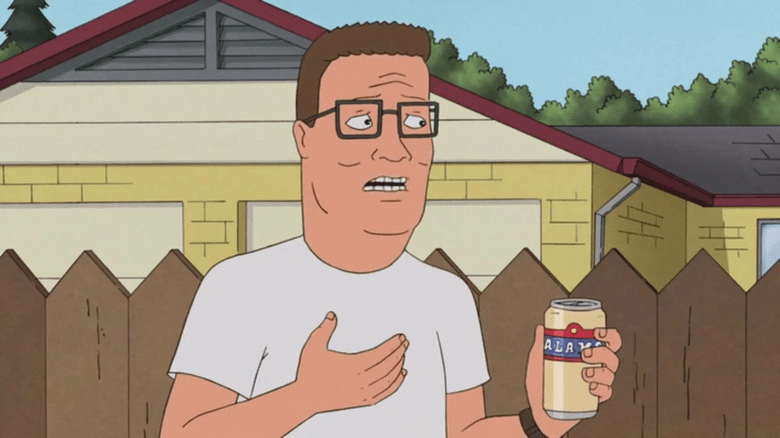
Okay, that’s too many Hanks.
We need to appreciate Art for Art’s sake and treat politics with the gravity it deserves. There’s still room to have critical discussions about Art – including the politics of a work – but that doesn’t make it a replacement for how we discuss issues both social and economic. Of legislation and laws, and how systems can be abused when not being vigilant enough to enforce them justly. These are things that pop culture can comment upon, to be topical, but can never properly discuss or analyze them when entertainment is their primary purpose. To discuss politics properly requires a level of effort – to understand theory, rhetoric, and praxis – but anyone can comment on pop culture as it doesn’t necessarily require knowledge to discuss. It’s a disservice to both Art and politics to treat them so interchangeably, to allow for bad-faith actors, charlatans, and useful idiots to steal attention away from and hijack any discussion that could be otherwise informative and constructive. We need to keep them out, at all costs, out of respect for both Art and politics.
I have one last thing to say to those who view themselves as Culture Warriors, some simple advice that should be taken to heart, that was best expressed by Anna Gunn as Skylar White in Breaking Bad:
My next piece is likely going to be, due to the recent release of its sequel, the second in A Soulsborne Review series – Blasphemous!
Until then…

















 NickNameNick